
SiC-Coated Graphite Susceptor Refurbishment: Cost Analysis & Engineering Risks
Compare SiC-coated graphite susceptor refurbishment costs, failure modes, QA checks, and replace-vs-recoat limits for MOCVD procurement decisions.
As semiconductor fabrication aggressively scales to 8-inch Silicon Carbide (SiC) and Gallium Nitride (GaN) devices in 2026, the consumption of high-purity SiC-coated graphite susceptors in MOCVD and epitaxial reactors has become a significant operating expense.
For procurement teams and fab managers, extending the lifecycle of these consumable components through refurbishment (stripping and recoating) presents an attractive cost-saving opportunity compared with buying new CVD SiC-coated susceptors. However, for process engineers, introducing a refurbished susceptor into a tightly controlled thermal environment introduces critical variables.
This guide provides a rigorous framework for evaluating the financial feasibility and technical risks of susceptor refurbishment versus purchasing new OEM-grade components.
Executive Summary
- Cost Recovery: Professional refurbishment typically costs 40-50% of a new susceptor, restoring approximately 70-80% of original performance metrics.
- Dimensional Risks: The primary engineering risk is the loss of dimensional tolerance in wafer pockets due to the chemical stripping process, which can alter gas flow dynamics.
- Decision Boundary: Susceptors with macro-cracks, severe edge erosion, or deep pinholes penetrating the base graphite should be scrapped, not refurbished.
Scope, Date, and Decision Boundary
This review was last checked on July 26, 2026 for global procurement, MRO, and process-engineering teams comparing refurbishment against new SiC-coated graphite susceptor supply for MOCVD and epitaxy chambers.
The guidance applies to used SiC-coated graphite susceptors and wafer carriers operating in SiC, GaN, or related compound-semiconductor thermal zones. It does not apply to solid SiC parts, TaC-coated hot-zone hardware, or graphite substrates with visible structural cracking. For broader chamber-material fit, compare the part environment against the semiconductor thermal-field solution guide and the material compatibility matrix.
The cost model uses normalized planning bands: new susceptor cost = 100%, refurbishment cost = 40-50%, and refurbished service life = 70-80% of a new unit when the graphite substrate passes incoming metrology. Treat these as pre-RFQ screening ranges, not a purchase specification. Before a production release, align the acceptance plan with your supplier's quality and metrology evidence, chamber yield history, and dummy-wafer qualification data.
1. The Refurbishment Process: What Actually Happens?
When a susceptor reaches its end of life—typically due to SiC coating delamination, micro-cracking, or heavy epitaxial deposition buildup—it is removed from the reactor. The refurbishment process is not a simple cleaning; it is a destructive and reconstructive metallurgical procedure.
- Chemical Stripping and High-Temp Bake: The remaining SiC coating and residual dopants are stripped using aggressive halogen gases or chemical etching at high temperatures.
- Substrate Inspection: The bare isostatic graphite is inspected for structural integrity. The stripping process often removes a marginal layer of the graphite itself.
- Re-Machining (Optional): If the pocket geometries are slightly out of tolerance, precision CNC machining may attempt to correct the profile.
- Purification: The graphite must undergo a secondary high-temperature halogen purification to outgas any impurities absorbed during its first lifecycle.
- CVD SiC Recoating: A fresh layer of Chemical Vapor Deposition (CVD) Silicon Carbide (typically 80µm - 120µm) is applied.
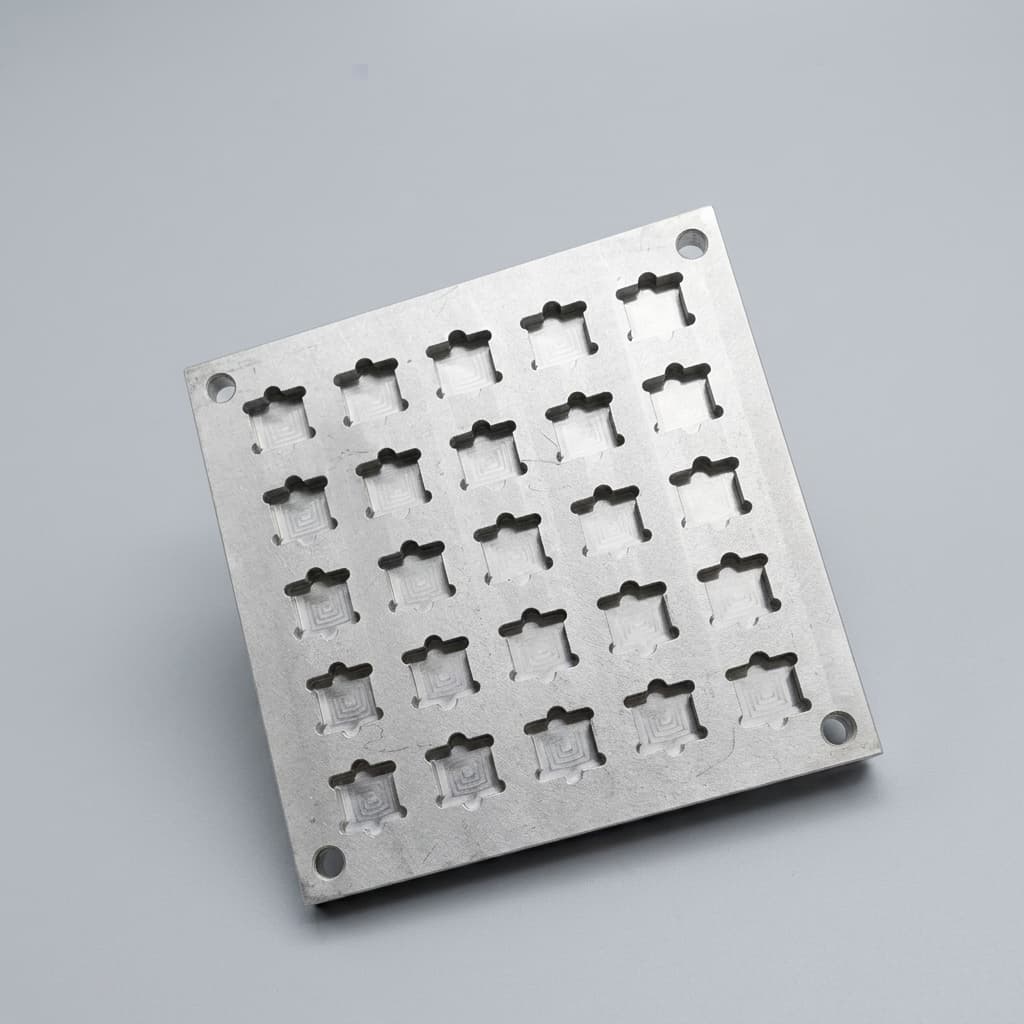 Figure: A high-purity SiC-coated graphite susceptor prepared for MOCVD processing.
2. Refurbish vs. Replace: Cost-Benefit Analysis
Procurement teams must evaluate the Total Cost of Ownership (TCO) beyond the initial invoice price. The table below outlines the comparative metrics between a new susceptor and a refurbished unit across a standard 6-month lifecycle.
| Metric / Parameter | New OEM Susceptor | Refurbished Susceptor | Procurement Impact |
|---|---|---|---|
| Acquisition Cost | 100% (Baseline) | 40% - 50% | Immediate CapEx reduction on refurbished units. |
| Expected Lifespan | 100% (Baseline) | 70% - 80% | Higher frequency of replacement required for refurbished parts. |
| Dimensional Tolerance | ±0.01 mm | ±0.03 mm - ±0.05 mm | Minor deviations in pocket depth can affect thermal uniformity. |
| Substrate Purity | >99.999% (5N) | 99.99% - 99.999% | Residual trapped dopants pose a slight risk of cross-contamination. |
| Coating Adhesion | Superior (Virgin interface) | Moderate to High | Micro-porosity in aged graphite may reduce CVD SiC interlocking. |
| Lead Time | 4-8 Weeks | 2-4 Weeks | Refurbishment offers faster turnaround during supply chain crunches. |
| Wafer Yield Risk | Low (Predictable) | Moderate | Requires strict incoming QA and dummy wafer qualification runs. |
Data represents planning averages for 150mm and 200mm MOCVD susceptor platforms. Replace the bands with vendor quotes, cycle-count logs, pocket metrology, and chamber yield data before issuing a production PO.
3. The Engineering Risks of Recoating
While procurement sees cost savings, process engineering must manage the physical realities of re-used graphite.
Dimensional Drift in Wafer Pockets
The most critical area of a susceptor is the wafer pocket. In 8-inch SiC epitaxy, the pocket depth and edge curvature control the boundary layer of the precursor gases. When the original SiC coating is chemically stripped, a microscopic layer of the base graphite is often consumed. This alters the pocket depth. If the recoating process does not perfectly compensate for this lost material, the wafer will sit differently in the gas flow, leading to non-uniform epitaxial growth.
Substrate Fatigue and Porosity
Isostatic graphite experiences thermal fatigue. After hundreds of cycles from room temperature to , the mechanical structure of the graphite weakens. When recoated, the CTE (Coefficient of Thermal Expansion) mismatch between the fatigued graphite and the rigid new SiC coating can trigger premature delamination.
Figure: Substrate fatigue. Stripping the old coating damages the graphite matrix, reducing the mechanical interlocking strength for the new SiC layer.
4. Procurement & Engineering Qualification Checklist
Do not send susceptors for refurbishment—or accept them back into the fab—without a strict qualification protocol. Use this checklist to align procurement and engineering teams:
- Initial Triage: Reject components with visible macroscopic cracks, corner chips, or deep localized pitting prior to sending to the refurbisher.
- Stripping Chemistry Verification: Ensure the refurbisher uses halogen-based high-temp stripping rather than aggressive mechanical abrasion.
- Pre-Coating Metrology: Require a dimensional inspection report of the bare graphite pocket depths before the new SiC layer is applied.
- Purity Certification (GDMS): Demand Glow Discharge Mass Spectrometry (GDMS) data verifying the substrate has been re-purified to <5 ppm total metallic impurities.
- Coating Thickness Uniformity: Verify the new CVD SiC coating thickness is between 80µm and 120µm with a variance of no more than ±10%.
- Dummy Wafer Run: Mandate a minimum of two thermal cycles with dummy wafers in the reactor to test for particle generation and coating outgassing before committing production wafers.
5. FAQ: Susceptor Lifecycle Management
Q: How many times can a graphite susceptor be refurbished?
A: For demanding applications like SiC epitaxy, a maximum of one to two refurbishments is recommended. Beyond this, the substrate fatigue and dimensional drift cause unacceptable yield losses.
Q: Does refurbishment cure pinhole defects in the base graphite?
A: No. If the original failure was caused by a deep pinhole that allowed gases to etch the underlying graphite, the void remains. Recoating over a subsurface void will result in immediate blistering during the first thermal cycle.
Q: Can we change the pocket design during refurbishment?
A: Minor deepening is possible through CNC re-machining before recoating, but you cannot add material or significantly alter the pocket profile without compromising the structural integrity of the web between pockets.
6. Conclusion and Next Steps
Refurbishing SiC-coated graphite susceptors is a viable strategy to optimize CapEx, provided it is managed with rigorous engineering oversight. The immediate 50% cost savings must be balanced against the 20-30% reduction in lifespan and the elevated risk of dimensional drift.
For critical production nodes where yield predictability is paramount, relying on new, OEM-qualified susceptors remains the safest path. Refurbished units are best deployed in non-critical chambers, R&D environments, or early-stage buffer layer depositions.
Looking to stabilize your MOCVD yields with pristine, high-tolerance components?
Contact our engineering team to discuss custom SiC-coated graphite susceptors engineered for maximum thermal cycling endurance and perfect CTE matching.
References & Sources
- SEMI: Standards program for semiconductor equipment and materials (used as the qualification-framework reference; machine check returned Cloudflare 403, not a nonexistent URL).
- SGL Carbon: Specialty Graphites for the Semiconductor Industry (high-purity isostatic graphite, semiconductor hot-zone use, and impurity control context).
- Google Patents: US5584936A, Silicon-carbide-coated graphite members (technical background on SiC-coated graphite members, coating defects, and pinhole-related failure concerns).
Author

More Posts
SiC Coated Graphite Procurement 2026: Navigating New Purity Standards and 8-Inch Demands
2026 SiC coated graphite procurement guide for 8-inch wafers, T/CASAS purity checks, GDMS evidence, supplier qualification, and RFQ risk-control steps.
C/C Composite Fasteners vs. Molybdenum in Vacuum High-Temperature Furnaces
A technical comparison of Carbon/Carbon composites and Molybdenum hardware in vacuum furnaces. Discover why C/C composites are replacing refractory metals.
CVD SiC Coating vs. Bare Graphite in MOCVD: A Cost & Contamination Analysis
Why bare graphite fails in modern MOCVD. Analyze trace metal contamination, wafer slip, and the lifetime ROI of CVD SiC coated susceptors.